- Call Now for Same-Day Service
- SALT LAKE CITY 801.397.0079
- UTAH COUNTY 801.768.1995
- WEBER & DAVIS COUNTY 801.621.2137


The Do’s and Don’ts of Unclogging a Garbage Disposal

Is Your Dryer Not Heating? Common Causes and Simple Fixes
March 18, 2026
Why Is My Freezer Leaking Water? Troubleshooting Tips
May 20, 2026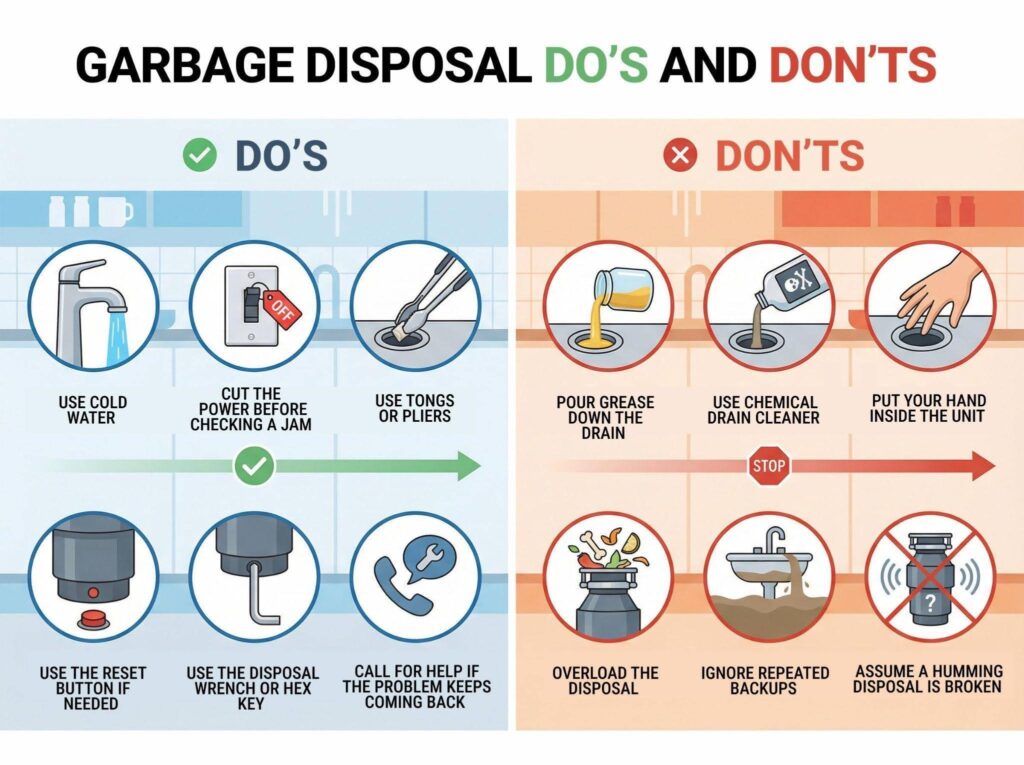
Unclogging a garbage disposal usually starts with shutting off the power, checking for a jam, and clearing the drain safely. If your garbage disposal backs up, avoid chemical cleaners and never reach inside the unit. A few basic garbage disposal safety tips help you protect your hands and plumbing.
What to do when your garbage disposal backs up
A backed-up disposal quickly disrupts kitchen cleanup. Water may pool in the sink, scraps stop moving, and the unit may hum without working. When that happens, it’s easy to try the fastest fix, but that makes the problem worse.
You can safely handle many clogs and jams with a calm, step-by-step approach. This guide explains what to do, what to avoid, and when to call for professional garbage disposal repair.
What to know before you start unclogging a garbage disposal
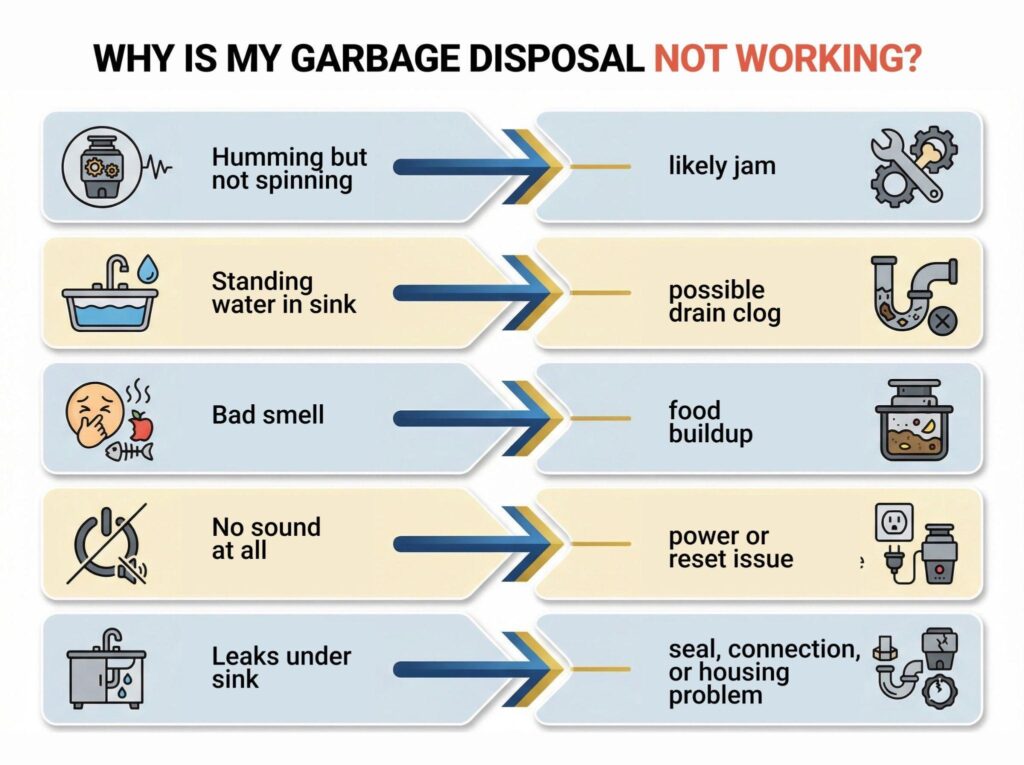
A garbage disposal issue does not always mean the unit has broken. Food can jam inside, the drain line can clog, or the motor can get power even when not turning properly.
If your garbage disposal backed up, look at the symptoms. Standing water may point to a clog, while a humming sound often suggests a jam. Before you do anything else, cut power completely. This is one of the most important garbage disposal safety tips.
How to unclog a garbage disposal
1. Turn off the disposal, and disconnect the power
Switch the wall control off first, then unplug the disposal or turn off the breaker if needed. Don’t rely solely on the wall switch if you plan to inspect the unit closely. This is the first rule for safe unclogging of a garbage disposal.
2. Look for obvious obstructions with a flashlight
Shine a light into the disposal opening. If you see a utensil, bone, fruit pit, or other object, use tongs or pliers to remove it. Never reach inside with your hand, even if you believe the power is off.
3. Check for a jam
If the disposal hums but does not spin, something may be blocking the internal grinding plate. Whirlpool’s jam-clearing guidance says many units can be worked free from the bottom using the supplied wrench tool, moving it back and forth until the mechanism turns fully.
4. Press the reset button if needed
Many disposals have a reset button on the bottom of the unit. If the overload protector trips, resetting the unit may restore service after you clear the jam. Whirlpool’s support page describes this as a common troubleshooting step and recommends testing with cold water running afterward.
5. Run cold water and test briefly
Manufacturers recommend running the disposal with a moderate to strong flow of cold water and flushing the system after grinding. It specifically notes that cold water helps harden greasy substances, making them easier to grind into smaller particles.
6. Use a sink plunger if water is still standing
If your garbage disposal backed up and the unit now spins but the sink still drains slowly, the problem may be in the drain line rather than the disposer itself. A sink plunger sometimes helps loosen a nearby clog. In a double-basin sink, block the second drain opening first to improve pressure.
7. Stop if the problem keeps returning
Repeated backups, leaks, burning smells, or a unit that still hums after basic troubleshooting usually mean it is time for professional repair. At that point, forcing the issue causes more damage than the original clog.
Common garbage disposal problems
A backed-up sink may happen after grease, peels, or food scraps build up too quickly. In other cases, the disposal may hum because something is stuck inside. You may also notice the unit seems to run, but the sink still drains slowly, suggesting a clog deeper in the line. If your garbage disposal backed up more than once in a short period, it’s time to stop guessing and get the system inspected.
Benefits of taking the right approach
Using the right method helps more than today’s clog. It also:
- Lower the chance of hand injuries or electrical accidents
- Reduce unnecessary wear on the disposal motors
- Prevent damage from harsh drain chemicals
- Help you tell the difference between a jam and a drain-line clog
- Make it easier to decide when a repair call is the smarter optionss
- Support better kitchen habits that prevent future backups
Garbage disposal mistakes to avoid
- Reaching inside the disposal without cutting power
- Pouring chemical drain cleaners into the unit
- Using hot water with greasy food scraps
- Overloading the disposal all at once
- Assuming a humming disposal isn’t working
- Ignoring the possibility of a deeper drain-line clog
Helpful resources and takeaways
Use cold water and flush after use
Most disposal care guides recommend running cold water during operation and for a few seconds afterward. This helps move food waste through the drain and reduce greasy buildup.
A humming disposal may have a jam
If the motor hums but the unit doesn’t spin, the problem is often a jam rather than a full breakdown. Many disposals can be loosened with the wrench tool under the unit and then reset.
Odors often come from buildup
Bad smells do not always mean something has broken. In many cases, grease, food scraps, and residue have collected inside the unit or nearby drain line over time.
Always cut the power first
Before checking for a clog or jam, shut off power completely. This is one of the most important garbage disposal safety tips because disposals combine sharp parts, electricity, and a tight work area.
Basic tools that help
A few basics usually help:
- Flashlight
- Tongs or needle-nose pliers
- Manufacturer-supplied disposal wrench or hex key
- Sink plunger
- Bucket and towels
- Owner’s manual or brand support page
FAQ
Can boiling water be poured down a garbage disposal?
Usually, no. Boiling water melts grease and pushes it farther into the drain, where it may cool and harden again. For everyday disposal use, cold water is usually the better option because it helps move waste through the system more effectively.
Can vinegar and baking soda unclog a garbage disposal?
They sometimes help with light residue, mild odors, or minor buildup inside the unit. However, they aren’t a reliable fix for every problem. If the disposal jams or the drain line clogs, vinegar and baking soda will not fix the real issue. They are better for light cleaning rather than major clogs.
Can ice cubes really unclog a disposal?
Ice cubes help break up minor residue and clean the inside of the disposal, helping with light buildup. Still, they aren’t a full solution for a serious clog. If the sink drains slowly or the disposal jams, ice cubes alone usually will not fix the problem.
Why is my garbage disposal humming but not turning on?
A humming sound often means the motor is getting power, but something inside is preventing it from turning. That could be a foreign object or food waste causing a jam. Turn off the power first, then check for an obstruction and use the wrench tool or reset button if your unit has one.
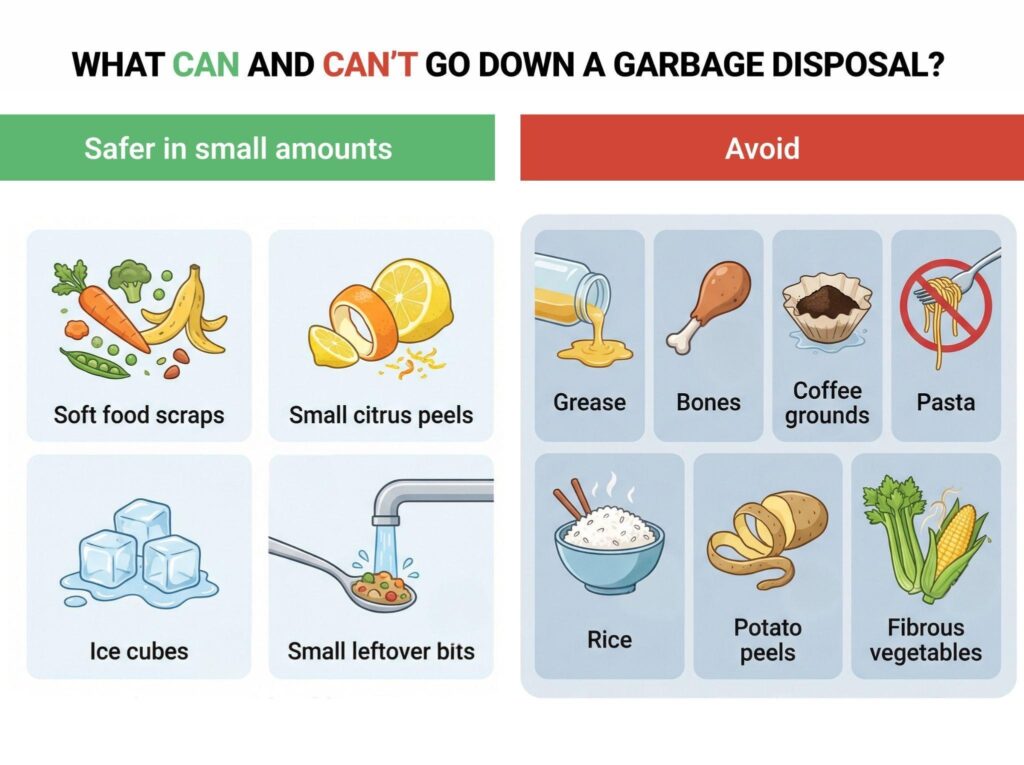
When to call Famous Appliance Repair for professional help
A clogged disposal doesn’t always mean a major repair, but it does call for a careful response. If you put safety first, use the right tools, and avoid common shortcuts, you can fix many minor problems without making them worse.When the disposal keeps jamming, leaking, or backing up, professional help is usually the safest next step. If you are dealing with a stubborn disposal problem and want a reliable fix, contact Famous Appliance Service for professional garbage disposal repair.