- Call Now for Same-Day Service
- SALT LAKE CITY 801.397.0079
- UTAH COUNTY 801.768.1995
- WEBER & DAVIS COUNTY 801.621.2137


Is Your Dryer Not Heating? Common Causes and Simple Fixes

10 Common Washing Machine Issues and How to Fix Them
February 18, 2026
The Do’s and Don’ts of Unclogging a Garbage Disposal
April 15, 2026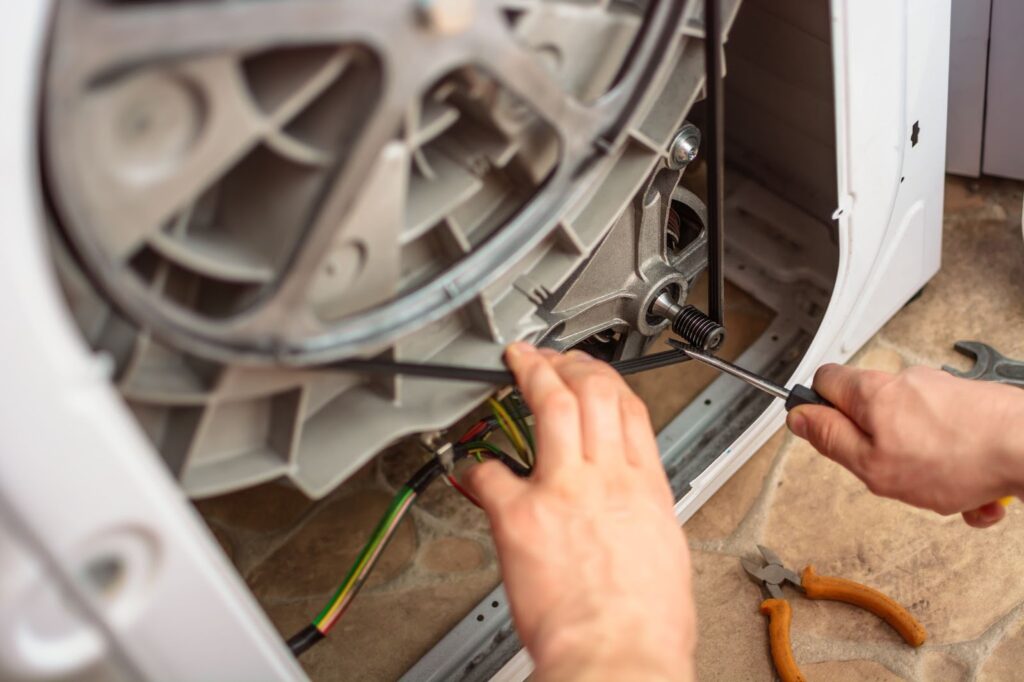
If your dryer not heating issue appears suddenly, the cause is often restricted airflow, a tripped breaker, incorrect settings, or lint buildup in the exhaust path. Start with safe checks, such as cleaning the lint screen, verifying strong vent airflow, and confirming the correct cycle. If your dryer isn’t drying clothes after troubleshooting, schedule professional dryer repair for an accurate diagnosis.
When your dryer stops doing its job
Few laundry problems are more frustrating than pulling out a load that’s still damp. When you’re dealing with a dryer not heating or a dryer not drying clothes situation, the cause is often simpler than it seems, like blocked venting or the wrong settings.
In this guide, you’ll learn the most common reasons a dryer stops heating, the safe steps you can try at home, and the red flags that mean it’s time to call a technician. We’ll also explain when dryer repair is the smartest option to restore performance and reduce safety risks.
Why your dryer stops heating
Dryers need two things to work well: heat and steady airflow. If either one drops, clothes stay damp fast. That’s why a dryer not heating problem isn’t always a bad heater — sometimes the dryer produces heat, but blocked venting prevents moisture from escaping.
Electric dryers use a heating element on a 240-volt circuit, while gas dryers use an igniter and a burner. Both depend on clean airflow, so lint buildup, crushed ducting, or a clogged exterior vent hood can trap heat, trigger safety cutoffs, and extend dry times.
When dry times suddenly double, check airflow first, as restricted venting can also create overheating risks.
Step-by-step: Diagnose a dryer that won’t heat safely
Before you dig in, keep safety in mind. If you smell burning, see scorching, or notice the dryer running unusually hot, stop using it and schedule service.
1. Confirm the cycle and settings
Make sure you didn’t accidentally select an “air only” or “air fluff” cycle. For many loads, timed dry or a normal sensor cycle works best. Low heat settings also extend the dry time enough that it feels like the dryer isn’t working.
2. Clean the lint screen thoroughly
Remove lint after every load. If fabric softener residue has coated the screen, water may pool on top rather than flow through. Rinse the screen with warm water, gently scrub with a soft brush if needed, and let it dry completely.
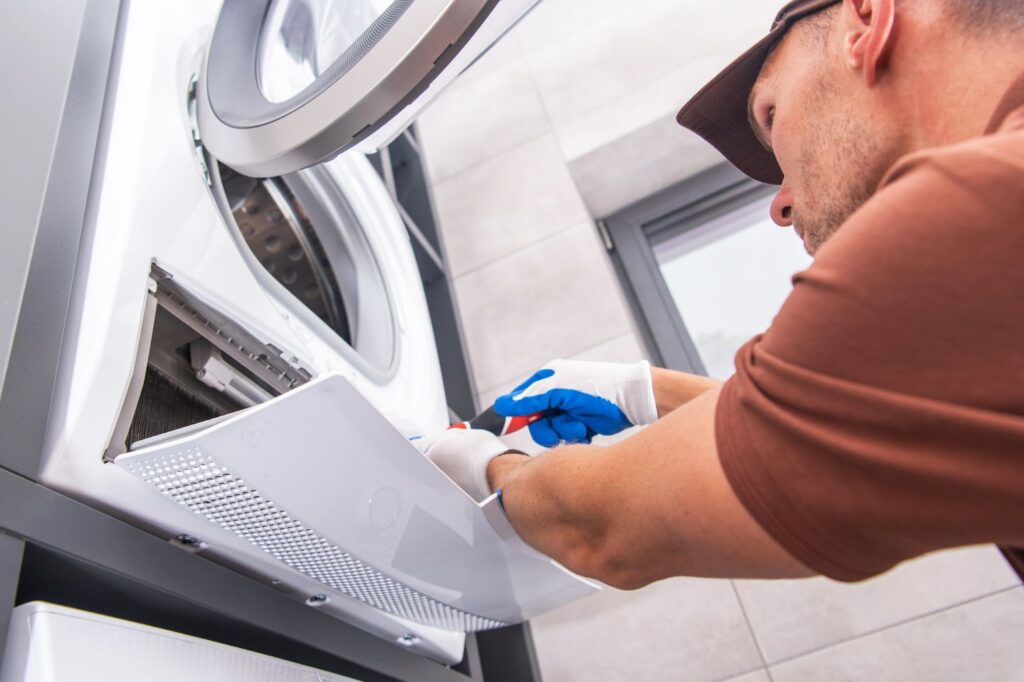
3. Check the lint screen housing
Lint builds up below the screen. Use a lint brush or vacuum attachment to clear loose debris you can reach safely.
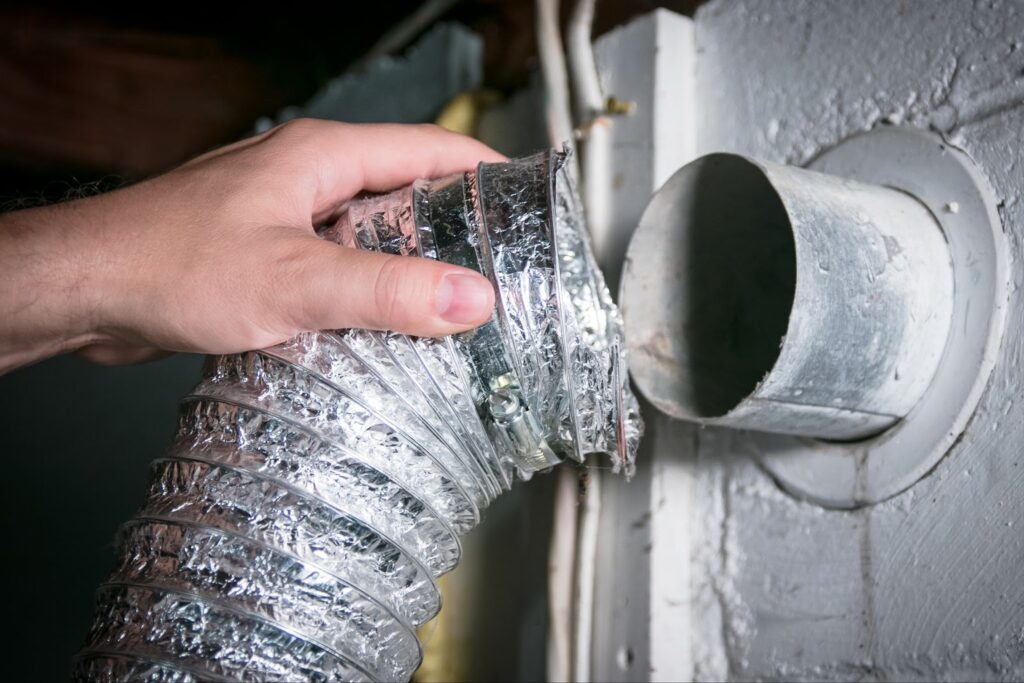
4. Verify airflow at the exterior vent
Run the dryer for a few minutes and check the outdoor vent hood. You should feel strong, steady air movement. Weak airflow often explains a dryer not drying clothes.
5. Inspect the vent duct behind the dryer
Pull the dryer forward carefully and look for crushed or kinked ducting. Flexible foil ducts crush easily and trap lint. Straighten the line if you can, but avoid sharp bends.
6. Confirm proper power for electric dryers
Electric dryers often tumble on 120 volts but need the full 240 volts to heat. If one breaker leg trips, the drum may spin while the heat disappears. Check the breaker and reset it fully.
7. For gas dryers, confirm the gas supply and ignition behavior
Make sure the gas valve is open. If the dryer starts but never ignites, or you smell gas, stop and schedule professional service.
8. Run a short test cycle and note what you observe
Does the drum turn? Do you feel any warmth inside? Does the dryer shut off early? These clues help narrow down whether the problem is airflow, power, or a heating component.
Common causes of a dryer not heating
Dryer heating issues usually fall into a few categories. The most common are airflow restrictions, power problems, and failed safety components.
Restricted venting and airflow
Blocked vent ducts, lint buildup, or a stuck exterior vent hood prevent moisture from escaping. The dryer may heat, but the trapped, hot, moist air continues to circulate, leaving clothes damp. In some cases, restricted airflow triggers overheating protection, and the dryer reduces heat or stops it entirely.
Tripped breaker or electrical supply issue
As mentioned, electric dryers still run without full heating power. If you have a dryer not heating complaint and the dryer tumbles normally, check the power next, especially after storms or electrical events.
Blown thermal fuse or thermostat issues
Dryers use safety components to prevent overheating. If a thermal fuse blows or a thermostat fails, the dryer may stop heating. These components often fail because airflow problems push the dryer beyond safe operating conditions.
Heating element failure (electric)
A broken or worn element prevents heat from reaching the element entirely. If airflow and power are good, the element becomes a more likely culprit.
Igniter or gas valve issues (gas)
Gas dryers rely on ignition and fuel delivery. A failing igniter, sensor, or valve causes the dryer to tumble with little to no heat. Gas appliances require professional handling, so schedule service when you suspect ignition problems.
Simple fixes you can try at home
Some solutions are quick and safe. Others are a sign you should stop and call for service.
Clean the full lint path you access safely
Start with the lint screen and the housing beneath it. Then check the duct behind the dryer and the outside vent hood. If airflow improves, you may resolve the problem of the dryer not drying clothes without further steps.
Reduce load size and improve airflow inside the drum
Overloading blocks air movement through wet fabric. Try smaller loads and avoid packing heavy towels tightly. Separate heavy items from lightweight items when possible.
Choose a cycle that matches the load
A low-heat cycle on thick towels feels like a heating failure. Try normal heat or timed dry for bulky loads, then adjust once performance returns.
Reset the breaker properly
If you suspect a power issue, reset the dryer breaker fully. If the breaker trips again, stop and schedule service, because repeated trips signal an electrical fault.
If the dryer still struggles after these steps, schedule dryer repair rather than running repeated cycles. Extra cycles add wear and increase safety risks if venting is restricted.
What these symptoms usually mean
Dryer problems usually show up in predictable patterns.
The dryer runs, but the clothes stay damp
This is one of the most common dryer not drying clothes complaints. In many homes, the root cause is restricted venting. The dryer produces heat, but moisture has nowhere to go, so dry times double.
The dryer heats briefly, then stops heating
This often points to overheating protection. Restricted venting traps heat, triggers a thermostat response, and causes the dryer to cycle heat off to protect itself. Clearing vent restrictions often solves the issue, but persistent symptoms may require service.
Dryer tumbles but produces no heat at all
If airflow looks strong and power is correct, this pattern points to a thermal fuse, heating element, or ignition system issue. This is usually the point at which dryer repair is the right step.
Why fixing dryer heating issues quickly matters
When a dryer stops heating properly, it’s easy to keep running extra cycles. That approach costs more in energy and creates unnecessary wear on the motor, drum rollers, and belt. It also risks overheating if airflow is restricted.
Fixing heating problems early matters because it:
- Restores normal dry times and lowers energy waste
- Reduces wear caused by repeated cycles
- Helps protect fabrics from over-drying and heat stress
- Lowers the chance of safety shutoffs and overheating
- Prevents a recurring dryer not heating problem from becoming a bigger failure
Common mistakes to avoid
A few habits make heating problems worse.
- Running multiple cycles without checking the airflow
If venting is blocked, repeated cycles increase heat buildup and strain. - Replacing parts without verifying venting and power first
Many issues are airflow- or power-related. Diagnose before you replace. - Using crush-prone ducting
Flexible foil ducts collapse easily and trap lint. Semi-rigid ducting holds shape better. - Overloading the dryer
Too many clothes block air movement and increase dry time. - Ignoring hot smells or overheating
Stop use if something smells “off,” and schedule service.
Data and safety insights about venting and lint
Longer dry times often signal blocked airflow. The CPSC notes that damp clothes or longer-than-normal cycles may indicate a blocked lint screen or an exhaust duct.
Failure to clean leads to serious problems. The U.S. Fire Administration lists “failure to clean” as the leading factor in residential clothes dryer fires.
Dryers drive most washer/dryer home fires. NFPA research shows dryers account for the majority of home structure fires involving dryers and washers.
Tools and products that help
A few basic tools help make troubleshooting safer.
- Dryer vent brush kit for lint buildup in accessible sections
- Vacuum hose attachment for lint areas around the screen housing
- Foil tape for vent connections (avoid duct tape, which fails with heat)
- Semi-rigid vent ducting to reduce crushing and lint traps
- Lint cleaning brush for the lint screen housing
Use these tools for cleaning and airflow checks. For heating elements, wiring, ignition parts, or repeated shutdowns, schedule dryer repair.
FAQ
Why is my dryer running but not heating?
This usually comes down to settings, power, airflow, or a safety component. Confirm you’re not using an air-only cycle, then check breaker power for electric models. Next, verify strong airflow at the exterior vent. If airflow and settings are correct, a technician diagnoses heating components.
Why does my dryer take two cycles to dry?
A dryer not drying clothes issue often points to restricted venting, overloading, or poor airflow inside the drum. Start by cleaning the lint screen and checking exterior vent airflow. Reduce load size and avoid heavy mixed loads. If performance doesn’t improve, schedule service.
Is it safe to run a dryer that smells hot?
No. If the dryer smells hot, burning, or unusual, stop using it. Check lint and venting, and don’t run repeated cycles to “see if it gets better.” A technician inspects for overheating causes and confirms safe operation.
How often should I clean my dryer vent?
Many households benefit from annual vent cleaning, and homes with heavy laundry use may need it more often. If you notice longer dry times, a hotter laundry room, or weak exterior airflow, check venting right away rather than waiting.
When should I call a professional?
Call for service if basic airflow and power checks don’t resolve the issue, if the dryer shuts off repeatedly, or if you notice scorching, burning smells, or overheating. Professional diagnosis protects the appliance and reduces safety risks.
Restore heat and dry times with Famous Appliance Service
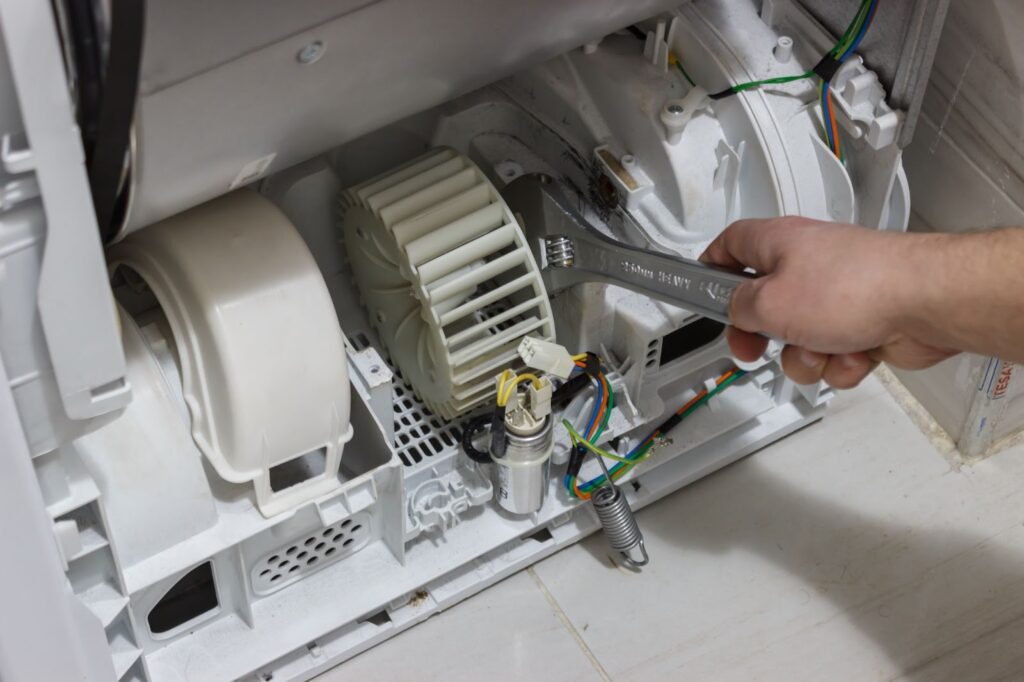
A dryer not heating problem often comes down to airflow restrictions, settings, or power issues, and safe troubleshooting can quickly restore performance. If your dryer isn’t drying clothes after you clean the lint path and confirm proper power, schedule dryer repair to diagnose the root cause and prevent further damage.
Contact Famous Appliance Service to book service and get your laundry routine back to normal.

