- Call Now for Same-Day Service
- SALT LAKE CITY 801.397.0079
- UTAH COUNTY 801.768.1995
- WEBER & DAVIS COUNTY 801.621.2137


How Long Does a Refrigerator Really Last? Signs It’s Time for a Replacement

Why Is My Freezer Leaking Water? Troubleshooting Tips
May 20, 2026
Emergency Refrigerator Repair: What to Do When Your Fridge Stops Cooling
July 15, 2026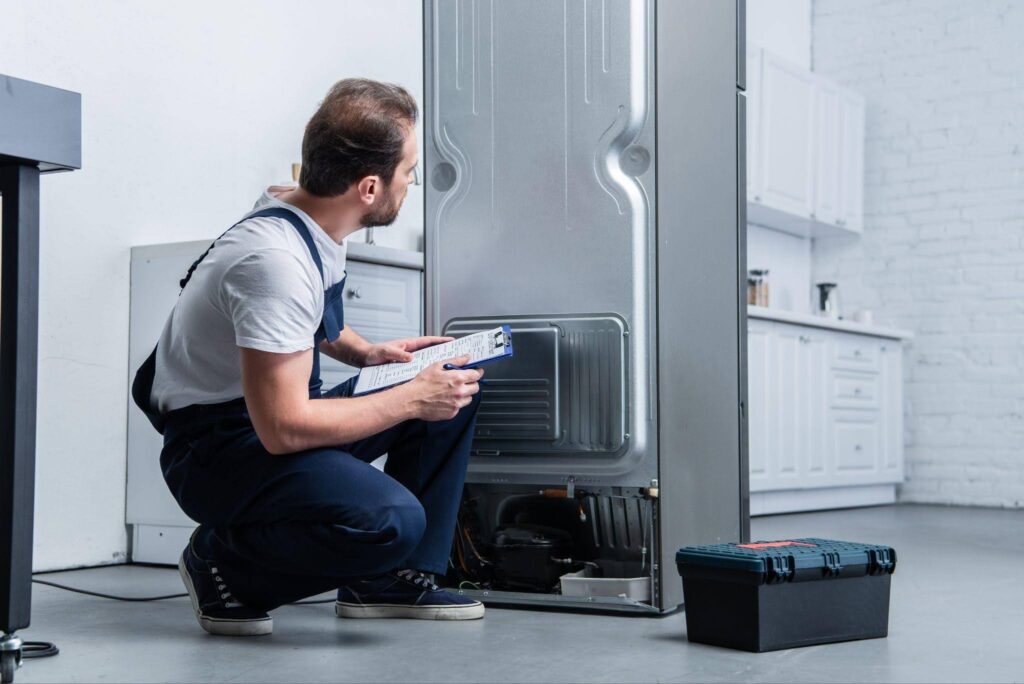
Most refrigerators last about 10 to 15 years, though maintenance, usage, brand, repair history, and installation all affect lifespan. If you’re wondering how long does a refrigerator last, the bigger question is whether it still cools reliably. Refrigerator replacement may make sense when refrigerator repair becomes frequent, costly, or tied to major part failure.
Why refrigerator problems are worth catching early
A refrigerator doesn’t always stop working all at once. It may start with soft ice cream, food that spoils early, louder running sounds, or a fridge that won’t shut off.
If you’re asking how long does a refrigerator last, you’re probably deciding between refrigerator repair and refrigerator replacement. This guide covers average lifespan, warning signs, simple checks, and when it’s time to consider a new unit.
How long do refrigerators usually last
So, how long does a refrigerator last in a typical home? Most refrigerators last about 10 to 15 years. Some units keep running longer with good maintenance and lighter use, while others start having problems sooner due to heavy use, poor airflow, worn parts, or poor installation conditions.
Age is important, but it shouldn’t be the only factor in your decision. A six-year-old refrigerator with a weak door gasket or a bad fan may still be a good candidate for refrigerator repair. A 14-year-old refrigerator with compressor trouble, recurring cooling issues, and rising energy use may be nearing the end of its useful life.
The real question is how well the appliance still does its main job. A healthy refrigerator should maintain steady temperatures, protect food, run quietly, and return to a steady temperature after the door opens. If it struggles with those basics, it’s worth paying attention.
Repair history also counts. One repair after years of reliable use isn’t unusual. Multiple service calls in a short period indicate the appliance is wearing down. When the same symptoms keep recurring, the cost and inconvenience outweigh the value of keeping the old unit.
Simple checks before you replace your refrigerator
Before you decide on refrigerator replacement, run a few simple checks. These tests won’t replace a professional diagnosis, but they help you understand whether the issue looks minor, ongoing, or serious.
1. Check the refrigerator and freezer temperatures
Use an appliance thermometer to check the actual temperature inside the refrigerator and freezer. Don’t rely only on the built-in display, especially if the appliance already seems inconsistent.
A refrigerator should usually stay around 37 to 40 F. A freezer should stay close to 0 F. Put the thermometer in the center of each compartment, wait several hours, and check it again. Then check the next day again.
If temperatures swing up and down, the refrigerator may have an airflow, thermostat, control, fan, or cooling-system issue.
2. Watch for spoiled food or thawing
Food freshness gives you a practical clue. If milk spoils early, produce wilts faster than usual, leftovers don’t keep well, or frozen food starts thawing and refreezing, the appliance may not be holding steady temperatures.
Soft ice cream is another common sign. If the freezer runs but doesn’t stay cold enough, the refrigerator may need service.
3. Test the door gasket
Close the refrigerator door on a dollar bill or a piece of paper. Gently pull it out. If it slides out with little resistance, the gasket may not be sealing well.
A weak gasket lets warm air enter the refrigerator. That makes the appliance run longer, create condensation, raise energy use, and affect food temperature. In many cases, this is a repairable issue.
4. Inspect the condenser coils
Dirty condenser coils make the refrigerator work harder to remove heat. Depending on the model, the coils may be behind or underneath the appliance. Clean dust or pet hair carefully with a vacuum brush or coil-cleaning brush.
After cleaning, give the refrigerator time to improve. If it still struggles after 24 hours, the issue may go beyond basic maintenance.
5. Listen for new or unusual noises
Some refrigerator sounds are normal. New buzzing, clicking, rattling, knocking, or grinding sounds deserve attention. A refrigerator that runs almost nonstop may also be struggling to maintain a consistent temperature.
Noises come from fans, relays, the compressor, ice maker components, or vibration against nearby surfaces. A technician helps narrow down the source.
6. Track whether the issue returns
One cooling issue may have a simple fix. Repeated problems are different. If the refrigerator keeps warming up, leaking, frosting over, or running constantly after basic cleaning or past service, it may be time to compare refrigerator repair with replacement.
Signs you may need to replace your refrigerator
Not every refrigerator problem means you need a new appliance. But when an older unit has repeated issues, refrigerator replacement may make more sense than another repair.
The refrigerator is 10 to 15 years old and declining
Age doesn’t automatically mean failure, but it changes the decision. If your fridge is older and has ongoing cooling problems, replacement may be the better long-term option.
Food spoils before it should
If milk, produce, leftovers, or frozen foods don’t last as long as they should, the refrigerator may not be maintaining a steady temperature.
The freezer has heavy frost buildup
Recurring frost points to a door seal, defrost, airflow, or temperature-control issue. If it keeps coming back, the appliance may need service.
The refrigerator runs constantly
A refrigerator should cycle on and off. If it runs almost nonstop, it may be working too hard to stay cold.
Repairs are becoming frequent
One repair may be normal. Multiple repairs in a short period show that the refrigerator is nearing the end of its useful life.
A major part is failing
Compressor trouble, sealed-system problems, control-board issues, or repeated cooling failures make replacement more practical, especially on an older unit.
Leaks, condensation, or warm spots keep coming back
Recurring leaks, moisture, or warm areas may indicate a larger issue if they persist after cleaning or minor service.
Why a refrigerator diagnosis saves guesswork
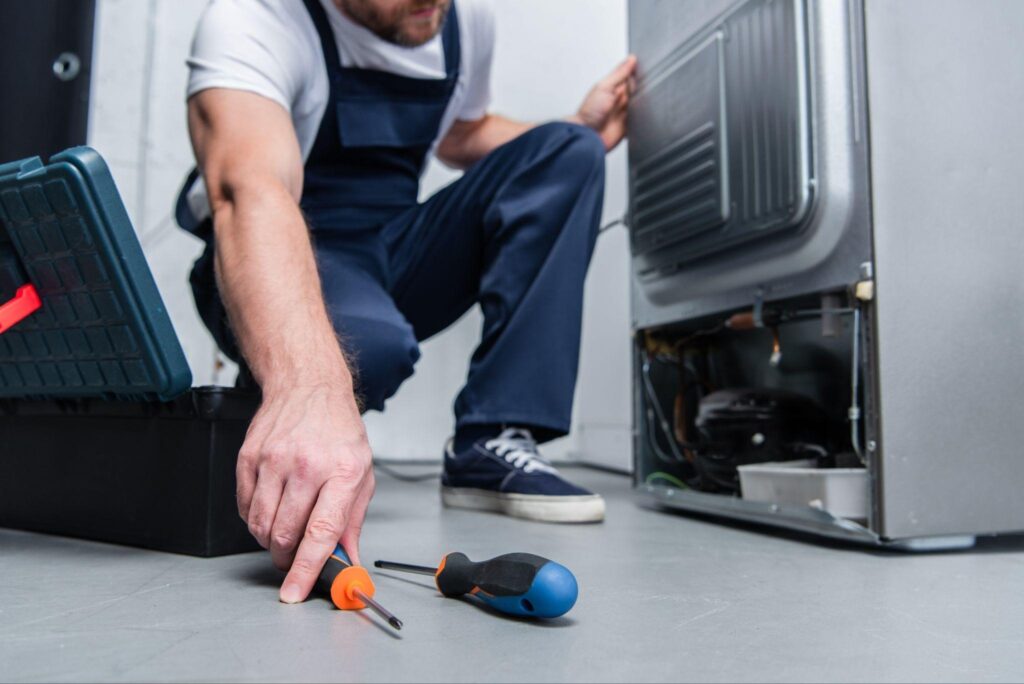
Refrigerator symptoms overlap. Dirty coils, a weak gasket, a faulty fan, a blocked vent, or a larger cooling issue can all make a fridge warm. The problem may feel the same, but the right fix may be very different.
A professional diagnosis helps you:
- Find the actual cause of the problem
- Avoid replacing a refrigerator too soon
- Understand whether repair is worth it
- Compare refrigerator repair with refrigerator replacement
- Get upfront pricing before work begins
Famous Appliance Service inspects the issue, explains what’s happening, and helps you decide the next step with less guesswork.
Common mistakes to avoid before replacing your refrigerator
Before you choose refrigerator replacement, avoid these common mistakes:
- Skipping simple checks: Dirty coils, blocked vents, overloaded shelves, worn gaskets, or a loose plug all affect performance.
- Ignoring temperature swings: A refrigerator that cools sometimes but not consistently still needs attention.
- Waiting through repeated food loss: If groceries keep spoiling early, the appliance may be costing you more than you realize.
- Assuming every old fridge is worth fixing: Some older units are still good candidates for refrigerator repair, but major repairs on a 15-year-old appliance may not make sense.
- Looking only at the repair price: Also consider energy use, future repairs, part availability, food loss, and reliability.
- Forgetting the 50% rule: If the repair costs close to half the price of a new refrigerator, replacement may be the better long-term choice.
What lifespan, energy use, and repair costs tell you
When people ask how long a refrigerator lasts, they usually want one simple number. The better answer is a range. Many refrigerators last around 10 to 15 years, but their actual lifespan depends on several factors:
- Maintenance: Clean coils, strong door seals, and good airflow help the unit run better.
- Usage: A heavily used refrigerator may wear down faster than one with lighter daily use.
- Model type: Some designs and brands last longer than others.
- Repair history: Repeated repairs signal that the appliance is nearing the end of its useful life.
- Energy use: Older refrigerators may use more energy than newer, ENERGY STAR-certified models.
- Temperature control: A refrigerator should maintain a steady temperature, and the freezer should stay close to 0 F.
Cost also plays a role. The 50% rule helps guide the decision: If the repair costs close to half the price of a new refrigerator, replacement may make more sense, especially on an older unit.
In short, refrigerator replacement becomes more likely when age, high repair costs, poor efficiency, and recurring symptoms all occur together.
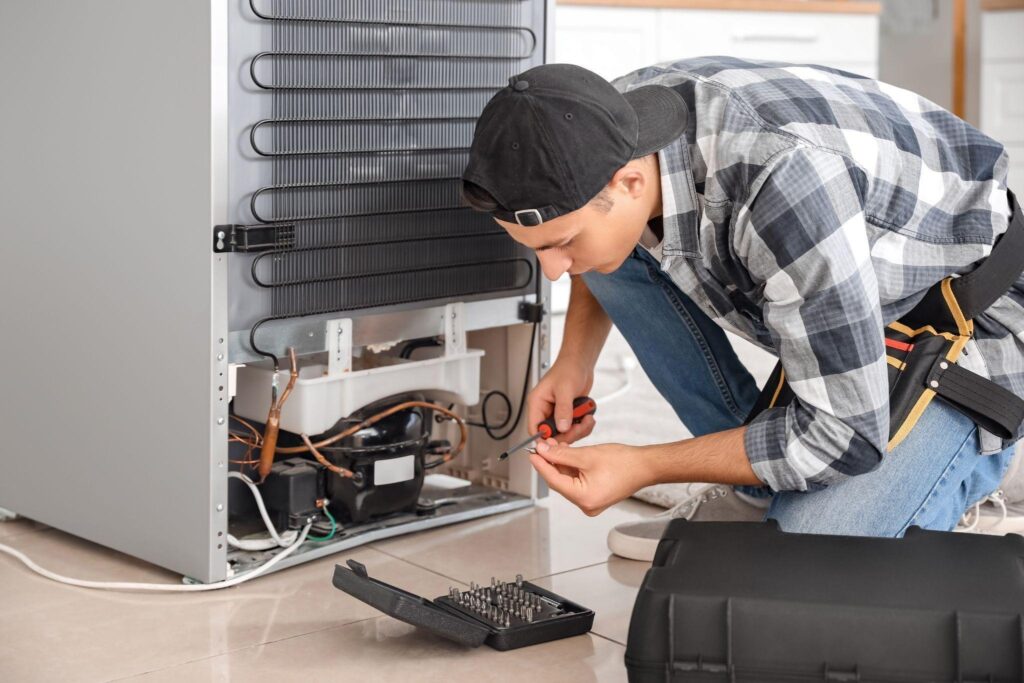
Ways to help your refrigerator last longer
You can’t make a refrigerator last forever, but a few simple habits help it run better and reduce avoidable problems.
Helpful tools include:
- Appliance thermometer
- Vacuum brush or coil-cleaning brush
- Mild cleaner for door gaskets
- Small flashlight for checking vents and coils
- Storage bins that organize food without blocking airflow
Good maintenance habits include:
- Clean the condenser coils regularly.
- Keep door gaskets clean to ensure proper sealing.
- Avoid overloading shelves or blocking vents.
- Leave enough space around the refrigerator so heat can escape.
- Check temperatures after power outages, after large grocery trips, or when signs of poor cooling are present.
If you’re asking, “How long does a refrigerator last?” because your unit keeps acting up, don’t ignore the pattern. Prompt refrigerator repair sometimes extends the appliance’s life, especially when the issue involves a repairable part.
FAQ
How long does a refrigerator last on average?
Most refrigerators last about 10 to 15 years. If you’re wondering how long a refrigerator lasts, remember that usage, maintenance, brand, installation, and repair history all affect the answer. A well-maintained unit may last longer, while a heavily used or poorly maintained one may fail sooner.
Is it worth repairing a 10-year-old refrigerator?
It can be. A 10-year-old refrigerator may still be worth repairing if the issue is minor and the appliance has been reliable. Refrigerator repair makes more sense for problems like worn gaskets, fan issues, clogged drains, or thermostat problems than it does for repeated major failures.
What refrigerator problems are usually worth repairing?
Common repairable problems include worn door gaskets, faulty fans, clogged defrost drains, bad start relays, thermostat issues, sensor problems, and some airflow concerns. A technician inspects the appliance and explains whether the repair is practical based on the unit’s age and condition.
What refrigerator problems may not be worth fixing?
Major compressor issues, sealed-system failures, repeated cooling problems, and expensive control failures may not be worth fixing on an older refrigerator. The decision depends on the repair cost, part availability, and the appliance’s useful life after service.
How do I know if I need refrigerator replacement?
You may need a refrigerator replacement if the appliance is older, food spoils early, temperatures fluctuate, repairs are becoming frequent, the unit runs constantly, or the repair estimate is close to half the price of a new refrigerator. A professional diagnosis helps confirm the best next step.
Can refrigerator repair extend the life of my fridge?
Yes. Refrigerator repair often extends a fridge’s life by one to five years, depending on the appliance’s age, the failed part, and its overall condition. Minor repairs on newer or well-maintained refrigerators usually offer better long-term value than major repairs on older units.
Why local refrigerator service helps Utah homeowners
Utah households often rely on refrigerators for weekly groceries, meal prep, kids’ lunches, leftovers, and freezer storage. When a refrigerator starts warming up, it quickly disrupts the whole routine.
Garage and basement refrigerators may also work harder depending on where you install them. Temperature swings, dust, poor airflow, and heavy storage all affect performance over time.
That’s why local service helps. Famous Appliance Service helps Utah homeowners understand whether a repair is likely to solve the issue or whether replacement makes more sense. With clear communication, experienced technicians, and upfront pricing, you decide with less guesswork.
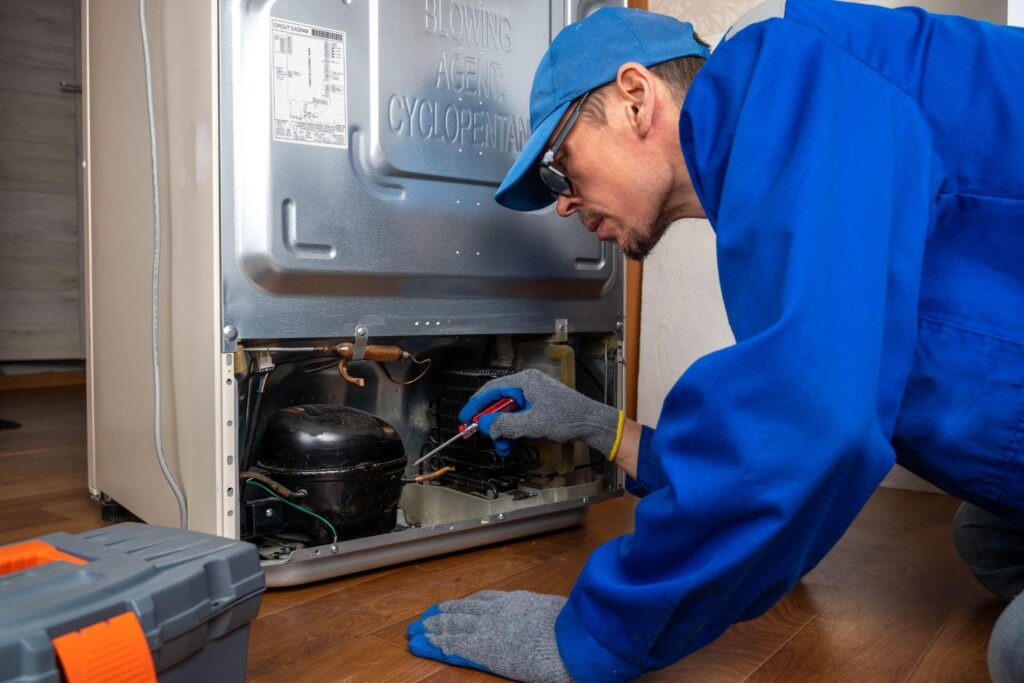
Call Famous Appliance Service before replacing your refrigerator
Most refrigerators last 10 to 15 years, but age is only part of the decision. Cooling performance, repair history, energy use, food spoilage, and part failure all help determine whether you should repair or replace the appliance.
If you’re unsure, don’t guess. Famous Appliance Service inspects your refrigerator, explains the problem, and provides upfront pricing before work begins. Schedule service today to find out whether a practical repair is possible or if it’s time to plan for a new refrigerator.